


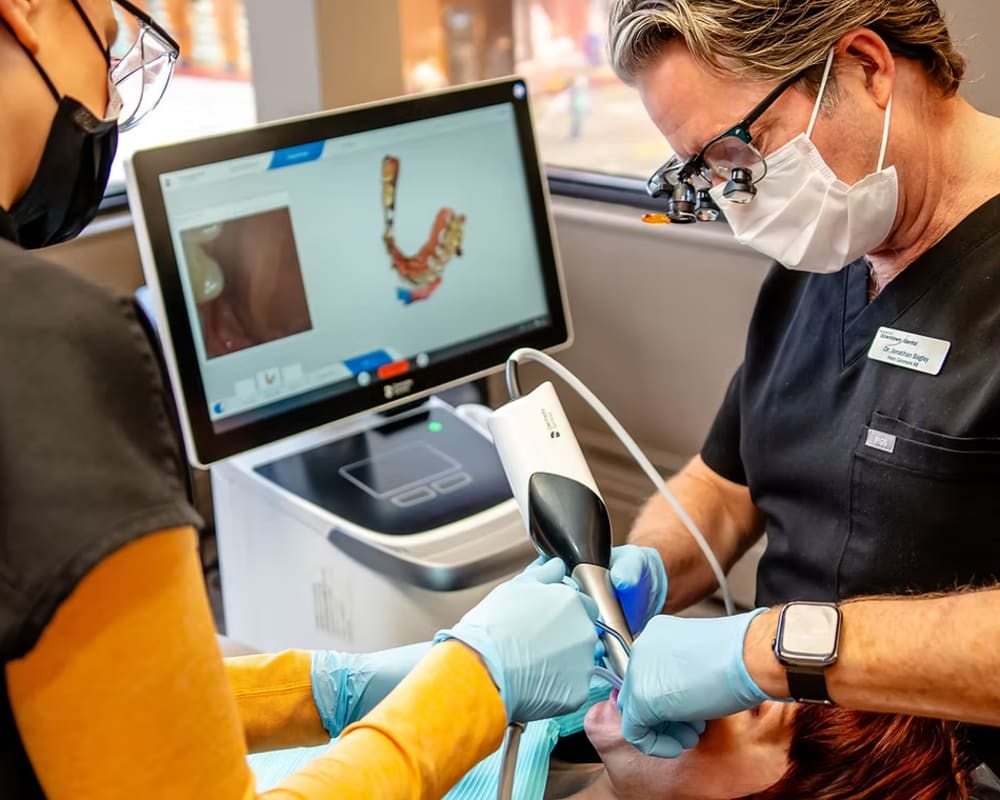
What is a Dental Implant?
A dental implant is a small titanium screw that acts like a natural tooth root. It can be used to replace just one missing tooth or several, depending on your needs.
The implant is carefully placed into the jawbone, where it fuses with your natural bone to create a stable foundation for a replacement tooth, such as a crown, bridge, or denture. Implants can help keep your other teeth in place, support a healthy bite, and even help maintain the shape of your face.
With dental implants, your replacement teeth can look, feel, and function much like your natural ones. They can make eating, speaking, and smiling more comfortable, and many people find their confidence improves when they don’t have to worry about missing teeth.
If you struggle with loose dentures, have trouble chewing your favourite foods, or have missing teeth, a dental implant consultation might be the solution you’ve been looking for.
Why It’s Important to Replace Missing Teeth
When a tooth is missing, the teeth beside the gap can begin to slowly shift out of position, which may eventually lead to bite or alignment problems.
The jawbone in that area can also begin to shrink over time because tooth roots normally stimulate the bone when you bite and chew. Without that stimulation, the bone gradually loses strength, which can weaken support for nearby teeth and increase the risk of additional tooth loss.
The Dental Implant Process
The dental implant process starts with a visit to an oral surgeon who will place a small titanium screw into your jawbone, where it acts like a natural tooth root.
This is done through a minor surgical procedure, and as your mouth heals, the implant gradually fuses with the bone to create a strong, stable foundation.
After three to six months, when you've finished healing, you’ll return to our office to complete the process.
At this stage, a custom replacement tooth, like a crown, bridge, or denture, is made to fit your smile.
This replacement is attached to the implant, giving you a natural look, feel, and function so you can eat, speak, and smile with confidence.
Dental Implant FAQs
Read the answers to our most frequently asked questions about dental implants at Canmore Downtown Dental.
-
How long does a dental implant last?
With the right care, a dental implant can a lifetime. That means brushing and flossing regularly at home and keeping up with routine dental cleanings and checkups.
How long an implant lasts can also be influenced by other factors, like overall health, nutrition, genetics, or the presence of dental conditions. By staying on top of your oral care and visiting your dentist regularly, you can help your implant stay strong and functional for years to come.
-
How do I care for my dental implants?
Caring for a dental implant is much like caring for your natural teeth. Keeping up with regular dental checkups and cleanings, along with daily brushing and flossing at home, helps keep your gums and surrounding teeth healthy, supporting the long-term success of your implant.
-
Does getting a dental implant hurt?
During dental implant surgery, your dentist will use anesthesia to keep you comfortable, so you shouldn’t feel any pain during the procedure.
Afterward, most people experience only mild discomfort, which can usually be managed with over-the-counter pain medication for a few days. It’s also a good idea to stick to soft foods for the first couple of weeks to avoid irritation and give your mouth time to heal.
-
How long does the dental implant process take?
The full dental implant process usually takes around three to six months, though the exact timeline can vary depending on your treatment plan.
Your dentist can give you a more personalized estimate based on your specific needs and situation.
-
Will my insurance cover dental implants?
Coverage for dental implants can vary. Some insurance plans may cover the full cost, others only a portion, and some may not cover it at all.
The best way to know what your plan covers is to check directly with your insurance provider before starting treatment.